
Leprosy is both preventable and treatable. Yet thousands of people in sub-Saharan Africa are still diagnosed only after irreversible damage has occurred. Limited access to early diagnosis, preventive care and effective treatment allows the disease to cause long-term disability, stigma and social exclusion, reinforcing cycles of poverty and inequality.
Ahead of World Leprosy Day, we spotlight three Global Health EDCTP3-funded projects tackling leprosy from different angles. Together, PEP4LEP 2.0, TEBULA and SkincAIr are advancing research that delivers real-world impact for affected communities.
PEP4LEP 2.0: identifying effective models for leprosy prevention and early detection
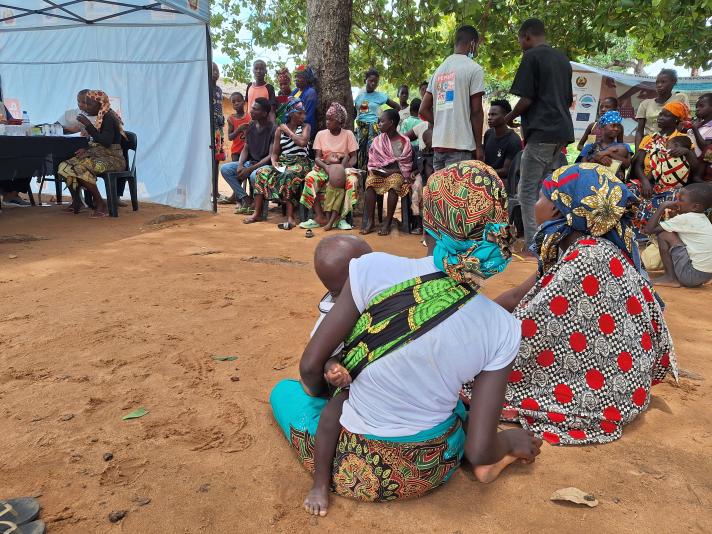
Building on the earlier EDCTP2-funded PEP4LEP project, PEP4LEP 2.0 focuses on preventing leprosy transmission by identifying and protecting people at the highest risk. The project compares two different models for leprosy screening and prevention in high-endemic areas of Ethiopia, Tanzania and Mozambique. One model uses community-based skin camps to bring screening and care directly to communities, while the other relies on health centre-based screening of household contacts.
'Leprosy and other skin conditions have a major impact on people’s lives in many countries in sub-Saharan Africa. As countries have so few specialist dermatologists, it is vital that we find ways to deliver effective disease prevention and care close to the communities.'
Dr Nelly Mwageni, dermatologist and PEP4LEP PhD candidate, Catholic University of Health and Allied Sciences (CUHAS), Tanzania
Since the start of PEP4LEP in 2018, a total of 36,531 contacts to people with leprosy have been screened, half of whom (50%) were found to have skin diseases. The projects have also identified 611 people with leprosy, who were immediately offered antibiotics and care.
Leprosy has a long incubation period, and transmission often occurs within households and close social networks before symptoms are recognised. For this reason, the World Health Organization recommends post-exposure prophylaxis (PEP) with a single dose of rifampicin for contacts of people diagnosed with leprosy. Within PEP4LEP and PEP4LEP 2.0, this approach has been implemented at scale.
Following eligibility screening, 32,750 contacts (90%) have received a single dose of rifampicin as post-exposure prophylaxis (SDR-PEP), contributing to reducing transmission risk while strengthening access to basic skin care services.
TEBULA: transforming leprosy treatment with new therapeutic options
While prevention is crucial, effective treatment remains essential for people affected by leprosy and other neglected skin diseases. TEBULA is a newly launched project aiming to improve the treatment of leprosy and Buruli ulcer in sub-Saharan Africa.
Current treatments are long, complex and often associated with significant side effects, making adherence difficult and limiting access to care. TEBULA is testing telacebec, a novel compound that could enable shorter, simpler treatment regimens with fewer drugs and fewer side effects, helping make treatment more effective and easier to deliver.
SkincAIr: Harnessing digital innovation for earlier diagnosis
Complementing efforts in prevention and treatment, Global Health EDCTP3 is also investing in digital innovation to improve early detection of skin-related neglected tropical diseases (NTDs). The SkincAIr project is developing an AI-powered smartphone application to support front-line health workers in identifying skin NTDs at an early stage in sub-Saharan Africa, where limited access to specialist care often delays diagnosis.
Piloted in five countries (the Democratic Republic of the Congo, Ethiopia, Kenya, Nigeria, and Senegal), the app uses machine learning to assist with diagnosis, enables real-time disease surveillance, and contributes to improved mapping of transmission hotspots. SkincAIr aims to strengthen health worker capacity, reduce disease transmission through earlier detection and support more responsive public health decision-making.
Global Health EDCTP3 and LRI join forces to fund leprosy research
The Leprosy Research Initiative (LRI), which previously co-funded the PEP4LEP project, has now joined Global Health EDCTP3 as a Contributing Partner. Through this new collaboration, LRI will co-invest €400,000 in the current call for proposals to develop tuberculosis (TB) drugs for therapy and prevention in adults and children in sub-Saharan Africa.
TB and leprosy are both caused by mycobacteria, Mycobacterium tuberculosis and M. leprae respectively, and share similar challenges related to transmission, diagnosis, and prevention in (co-)endemic settings. This strategic alliance will strengthen research efforts and underscore our shared commitment to improving treatment and prevention for TB and leprosy, two conditions that disproportionately affect vulnerable communities and which can benefit from integrated approaches that may offer an efficient way to address both diseases simultaneously. The call is now open, and researchers are encouraged to apply.
Apply for funding
- Publication date
- 23 January 2026
- Author
- Global Health EDCTP3 Joint Undertaking