
By Marco Albonico and Michael Makanga
This Friday, 30 January, is World Neglected Tropical Diseases (NTDs) Day, a milestone to remember that NTDs, also known as Neglected Infectious Diseases (NIDs), still affect over a billion people worldwide, disproportionately impacting children. Beyond their health impact, NTDs trap entire communities in poverty.
Skin NTDs such as leprosy and lymphatic filariasis cause deformities and inflammation, often resulting in stigma that profoundly affects people’s lives and livelihoods. Soil-transmitted helminths and flukes that cause schistosomiasis severely undermine children’s growth and schooling, resulting in illness, impairment, and disability for millions, while trachoma and onchocerciasis are the leading infectious causes of blindness worldwide.
Despite this burden, current global annual investment in NTD research and innovation (R&I) is estimated at around €700 million, roughly 0.2% of total global biomedical R&D spending. At this investment rate, delivering new medicines and other missing essential health tools is extremely challenging. This slow rate of innovation also heightens the risk of antimicrobial resistance (AMR), as pathogens continue to adapt to the limited existing treatments, while climate change is expanding the reach of mosquito-borne NTDs such as dengue and chikungunya into Europe. In this context of persistent funding constraints, global health researchers and innovators continue to advance new and improved tools to tackle NTDs, demonstrating strong scientific and socioeconomic returns on investment, including for Europe and other high-income regions.
'Over the last two decades, EDCTP, most recently through Global Health EDCTP3, has invested in NTD science and innovation, showing how long-term partnerships that integrate research and health care services deliver tangible impact, from essential medicines to digital technologies that strengthen diagnosis and are contextualised to local health systems. We remain fully committed to investing where it matters most: protecting the most vulnerable and advancing excellence, health equity, and security for all.'
Michael Makanga, Executive Director of Global Health EDCTP3.
Driving science, digitisation, and innovation to combat NTDs
Projects funded through EDCTP programmes have been instrumental in advancing Moxidectin, the first new treatment for river blindness in over two decades. The MoxiMultiDoseMod study demonstrated its superior and longer-lasting ability to reduce infection compared with the current standard therapy, while the MiniMox project is developing child-friendly formulations of Moxidectin. The ongoing EMINENCE project is further assessing its efficacy and cost-effectiveness in new target populations, and for addressing multiple NTDs. Collectively, these efforts supported the inclusion of Moxidectin in the WHO Essential Medicines List in 2025.
Leprosy remains a major health challenge due to delayed diagnosis and asymptomatic transmission among contacts. A single dose of rifampicin given to contacts of people affected by leprosy, known as SDR-PEP, has shown to reduce leprosy transmission by nearly 60%, but its effectiveness depends on how it is implemented. EDCTP-funded projects PEP4LEP and PEP4LEP 2.0 are evaluating community-based skin screening and SDR-PEP strategies with digital tools, while also supporting sensitisation and capacity development to improve early detection and prevention of the disease.
EDCTP-funded projects are harnessing digital technologies and artificial intelligence (AI) to transform diagnostics and health research in Africa. MultiplexAI is turning microscopes into intelligent diagnostic tools capable of identifying multiple parasitic infections at the point of care. Meanwhile, AFRICAI-RI is establishing a Pan-African imaging research infrastructure to strengthen research capacity, promote collaboration, and drive the development of AI and digital health applications across the continent. These AI-enabled tools can accelerate and enhance diagnostics and support real-time surveillance of NTDs and other infectious diseases, offering enormous potential for improved health security and, at the same time, contribute to decolonising AI.
A growing challenge for Europe that demands better preparedness
Europe needs to be better prepared for NTDs. Increased investment in R&I remains essential to improve detection and treatment tools, enabling faster and more effective responses to NTDs, but science alone will not be sufficient to tackle the complex challenge of NTDs. A striking example of this is that many European countries currently have no equitable access to NTD medicines.
To raise awareness of this issue, more reliable information on access to NTD medicines is needed. Only then can effective solutions be implemented. This is why the Federation of European Societies for Tropical Medicine and International Health (FESTMIH), in collaboration with the Institute of Tropical Medicine of Antwerp, is collecting data on the availability and accessibility of NTD medicines across Europe, with the aim of informing decision-makers and helping to mitigate shortages. With the growing risks posed by climate change and AMR, and disease vectors such as invasive mosquitoes already present in many EU member states, this gap could become a major public health challenge.
There is also a critical need for greater awareness of NTDs in Europe to ensure effective policies and interventions. The webinar series NTDs Around the World, jointly organised by DTG and FESTMIH, aims to contribute to this by providing an international platform for sharing knowledge, research findings, field experiences, and lessons learned across disciplines, advancing both understanding and practical solutions for NTD control and elimination. Upcoming sessions will feature Global Health EDCTP3-supported projects, highlighting ongoing research, implementation experiences, and lessons relevant to ending NTDs.
Finally, Europe must empower the next generation of scientists to build long-term capacity and resilience against future NTD threats. Ending NTDs will require the talent, ideas, and energy of young researchers and a stronger engagement of young people, particularly since NTDs disproportionately affect children and youth. FESTMIH is therefore strengthening collaboration with youth organisations, ensuring that young voices help shape solutions and strategies for tackling these diseases.
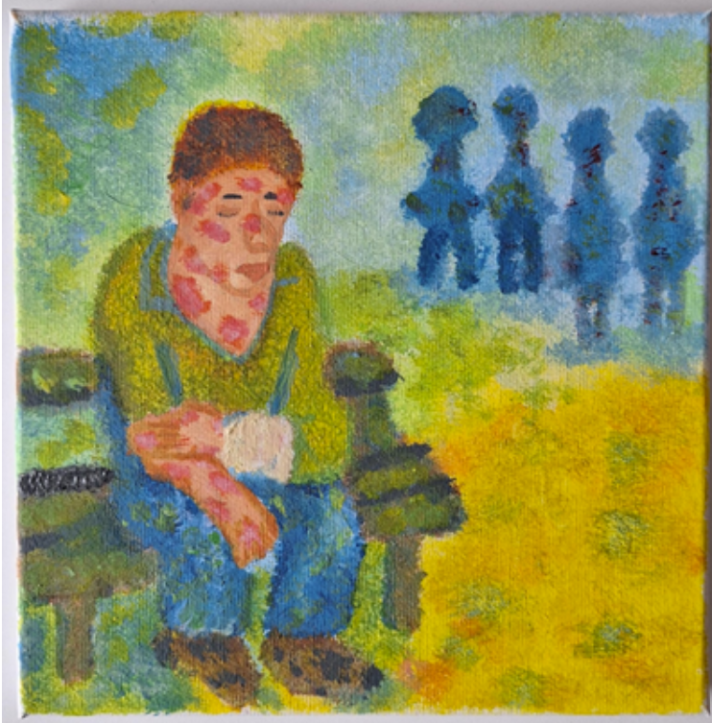
A recent example is the World NTD Day Art Contest, organised by the German NTD Youth Initiative (AG NTD) and the Ethiopian NTD Youth Initiative (Alert Gursha), supported by FESTMIH and with funding from the Andreas Ruppel Fund. The online contest received 15 submissions worldwide, inspired by an infographic on skin NTDs designed by Ethiopian artist Solomon Kifle. Over 1,400 people voted in the first round, showing how art can bridge backgrounds, ages, and professions to raise awareness of NTDs. The winner, Ilen Adriana Díaz Torres, a Mexican medical doctor pursuing an MSc in International Health at Heidelberg Institute of Global Health, Germany, created “The Pain Beneath”, reflecting the emotional weight of visible skin conditions.
'World NTD Day reminds us that global health challenges go far beyond public health. NTDs have major socioeconomic impacts affecting education, productivity, and social cohesion and are transmissible through people, animals, insects, and even blood or organ donations. NTDs often affect migrants and marginalised communities, making their management crucial for ensuring equity and access to quality care. Europe must strengthen its preparedness and resilience against NTDs, and a key way to achieve this is through an ambitious successor programme to Global Health EDCTP3. FESTMIH is fully committed to supporting these goals through our advocacy, research, and coordination networks.'
Marco Albonico, President of FESTMIH.
About FESTMIH
The Federation of European Societies for Tropical Medicine and International Health (FESTMIH) is a Europe-wide network bringing together national societies from more than 15 countries, representing thousands of researchers and health professionals. Its core mission is to advance research, collaboration and policy advocacy to improve global health, with a strong focus on infectious diseases and health equity.
About Global Health EDCTP3
The Global Health European & Developing Countries Clinical Trials Partnership 3 (Global Health EDCTP3) is a unique partnership between Europe and Africa dedicated to improving health through research and innovation. Backed by the European Union and over 40 countries, the programme focuses on infectious diseases that continue to impact millions across sub-Saharan Africa. Running from 2021 to 2031 with a €2 billion budget, Global Health EDCTP3 funds clinical trials, strengthens research infrastructure, trains the next generation of African researchers, and supports ethical, high-quality studies that are locally driven and globally relevant. By fostering collaboration between African and European partners, promoting the uptake of medical innovations, and enhancing preparedness for infectious disease threats, the programme aims to reduce the socio-economic burden of disease, improve health security, and ensure that research findings translate into real-world impact for underserved populations.
- Publication date
- 28 January 2026
- Author
- Global Health EDCTP3 Joint Undertaking