
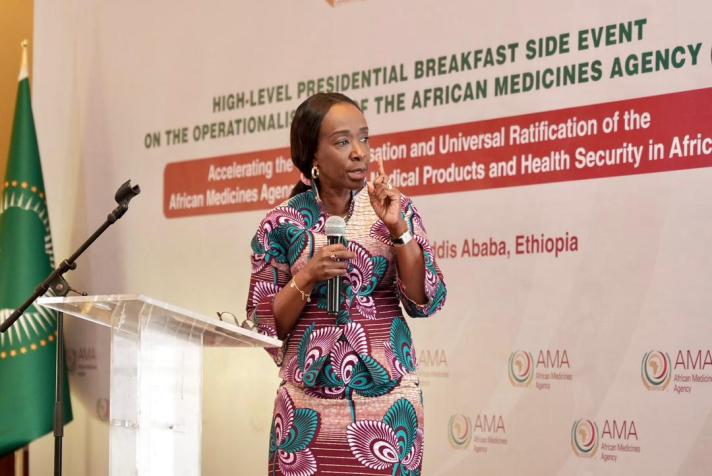
As we mark International Women’s Day, we celebrate the women whose leadership is shaping the future of science, public health and innovation across the globe. Among them is Dr Delese Mimi Darko, a pioneer in regulatory science with more than three decades of experience strengthening access to safe and effective medicines across Africa.
As the inaugural Director General of the African Medicines Agency (AMA) and the first woman to lead the Ghana Food and Drugs Authority, she has played a crucial role in building stronger regulatory systems and advancing public health on the continent. Earlier this year, she was listed among the most influential people in health by the TIME magazine.
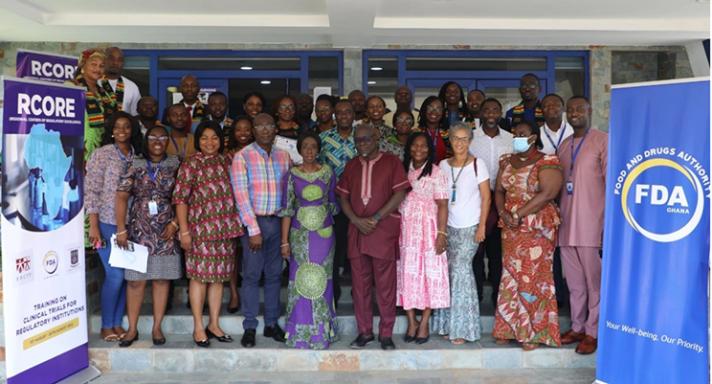
Her scientific journey has been closely connected with EDCTP through initiatives strengthening the regulatory capacity for clinical trials in partnership with African and European institutions.
Shaping a career in regulatory leadership
What were the key moments that defined your career path and inspired you to pursue leadership in regulatory science?
Several moments shaped my journey, but the most defining was realising that regulation is not a bottleneck to access: it is public health protection. Early in my career, I saw how weak regulatory systems directly harmed patients, especially women and children. I remember improving the packaging of children’s medicines to ensure they ALL included graduated measuring devices as none did.
This transformed the way infants and children were accurately and safely dosed. As Head of newly established regulatory functions, I then championed clinical trial and safety-monitoring regulatory systems nationwide to help protect patients, especially women and children, ensuring appropriate specific guidance were approved and used by ensuring that the medicines and vaccines they rely on are safe, effective, and of assured quality.
That understanding, combined with opportunities to build systems rather than just manage processes pushed me toward leadership. Each role reinforced my belief that strong regulation saves lives.
Advancing health through equitable partnerships like EDCTP
How did your work with EDCTP-funded projects shape or prepare you for your current role?
The EDCTP-supported work transformed how we worked in my national role. Through initiatives like BERC-Africa, STREC-Ghana, and SAVING, I learned the value of building sustainable systems specifically regulatory, ethical, and institutional, rather than short-term fixes. It also strengthened my commitment to equity, to later play my part, ensuring African-led trials, African data, and African decision-making.
How do you perceive EDCTP has contributed to strengthening health systems and research capacity in Africa?
EDCTP has played an important role in supporting clinicians, scientists, and regulators like me, strengthening Africa’s health sovereignty, boosting biomedical innovation in areas of high societal impact, and forging collaborations that improve health security for all.
EDCTP-funded projects are critical because they invest in people, systems and institutions. They help build competent regulators, strong ethics committees, and reliable systems, especially in countries that need them most. This is how we close gaps sustainably. At a time of geopolitical uncertainty, trusted partnerships with a proven track record like EDCTP are more essential than ever.
Building a unified African regulatory system
As the first Director General of the African Medicines Agency (AMA), what priorities are guiding your early leadership?
My focus is on three pillars: credibility through NRA capacity strengthening, collaboration including universal AMA treaty ratification, and supporting African manufacture through early engagement and innovation. We are building a trusted institution that complements not competes with national regulators, harmonises standards, and accelerates access to quality medical products, including while keeping patients at the centre of every decision.
What are the biggest opportunities and challenges in building a unified African regulatory system?
The opportunity lies in Africa’s collective strength, shared expertise, reliance mechanisms, and trust. The challenge is uneven capacity and fragmented NRA and partner efforts. Success will depend on political commitment for universal treaty ratification and sustainability, and continued investment in regulatory science.
How will AMA redefine partnerships with NRAs, WHO, and EMA?
With NRAs, AMA does not seek to replace or compete with them; it is aligning and amplifying them. NRAs remain AMA’s central to AMA’s success and credibility
WHO and EMA continue as strategic technical partners. Our collaboration with EMA is about mutual learning, reliance, and strengthening global regulatory convergence while WHO will continue to set the norms and standards on which AMA will rely.
Women leading change in science and public health
What did becoming the first woman to lead Ghana FDA mean to you?
It was deeply meaningful; not as a personal achievement, but as a signal that leadership can look different. It strengthened my resolve to open doors for other women and gave me the confidence to take on continental leadership at AMA.
What barriers do women still face in scientific and regulatory leadership?
Women often face invisible barriers: limited access to networks, fewer sponsorship opportunities, and the expectation to “prove readiness” repeatedly. Institutions must intentionally create inclusive leadership pipelines and value diverse leadership styles.
Which women or mentors influenced your journey most?
I have been shaped by strong women who led with integrity and purpose, and by mentors, both women and men, who believed in my capacity before it was visible, most specially my FAMILY. That belief makes a lasting difference.
What advice would you give young women entering science or regulatory careers?
Be confident in your expertise, pay attention to the details that matter but don’t wait for perfection before stepping forward. Your voice matters, and leadership is a skill that grows with courage and consistency.
Strengthening the future of African medicines regulation
What is your long-term vision for AMA?
I envision AMA as an efficient, predictable, patient-centred continental regulator working with excellence to accelerate access to safe, effective, and quality medical products, support local manufacture, and strengthen Africa’s health sovereignty.
How do you hope Africa’s regulatory landscape will look in 10 years?
I see a continent with strong, interconnected regulators, robust clinical trials and safety ecosystems, and African-led innovation reaching African patients faster.
What motivates you personally every day?
The knowledge that strong, efficient regulation protects lives; and that I can and must make a difference one day at a time, that by building institutions today, we are shaping a safer, fairer future for generations of Africans, especially women and children.
- Publication date
- 4 March 2026
- Author
- Global Health EDCTP3 Joint Undertaking