
In a milestone for global health and the fight against neglected tropical diseases, the European Medicines Agency’s (EMA) Committee for Medicinal Products for Human Use (CHMP) has adopted a positive scientific opinion for Acoziborole Winthrop, a single-dose oral treatment against sleeping sickness.
This new medicine is indicated for adults and adolescents (12 years and older, weighing at least 40 kg) suffering from human African trypanosomiasis (HAT), also known as sleeping sickness, caused by Trypanosoma brucei gambiense (gHAT).
Transforming patient care through innovation
Sleeping sickness is a neglected tropical disease that is typically fatal without treatment and is spread by the tsetse fly. While concerted efforts have reduced annual cases to fewer than 1,000, current therapies remain burdensome, often requiring multiple doses, intravenous infusions, or hospitalisation.
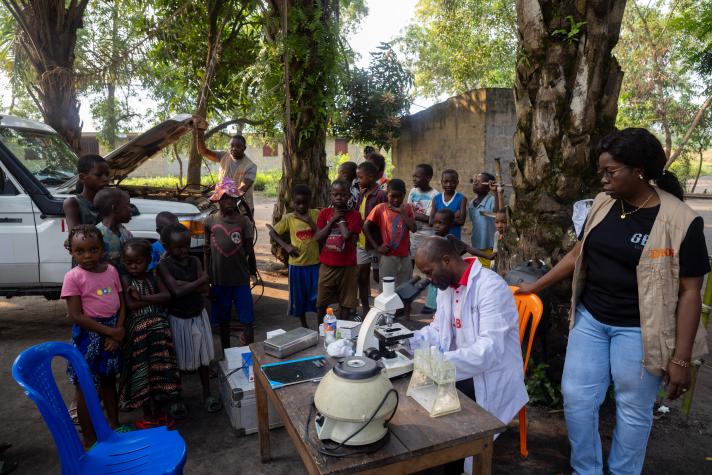
Acoziborole Winthrop represents a transformational step for its simplicity. As a single-dose oral treatment effective for both first- and second-stage disease, it eliminates the need for hospitalisation and invasive procedures such as lumbar punctures (spinal taps). This breakthrough enables a simplified ‘test-and-treat' approach that can be administered directly at the point of care in remote primary healthcare settings.
Clinical success and safety
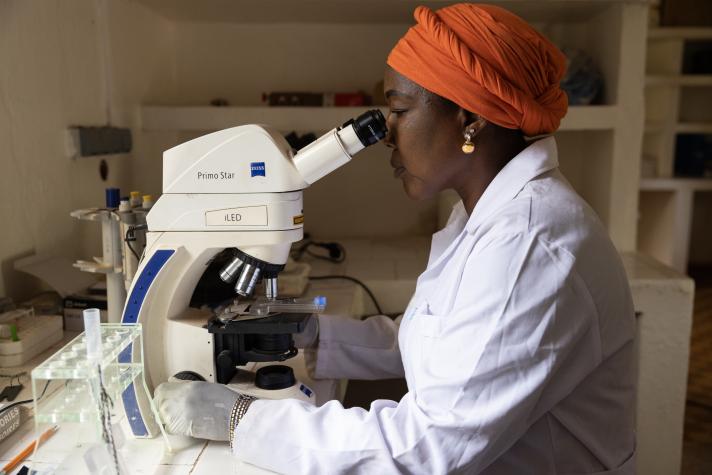
The positive opinion is based on results from a phase II/III clinical trial conducted in the Democratic Republic of the Congo and Guinea. The study demonstrated remarkable efficacy after 18 months, with a 100% success rate for patients with first- and intermediate-stage gHAT and a 95% success rate for patients with second-stage disease.
The medicine is believed to work by blocking an enzyme the parasite needs to produce essential proteins. While generally well-tolerated, common side effects include headache and fever; a post-authorisation study will continue to monitor real-world safety.
The important role of Global Health EDCTP3 and partners
The development of Acoziborole is the result of a decade-long collaboration between the Drugs for Neglected Diseases initiative (DNDi), Sanofi, and partners in endemic countries. Global Health EDCTP3 and its predecessor EDCTP programmes have been instrumental in building the evidence base for this treatment.
‘The development of Acoziborole is a powerful exemplar of how sustained investment in locally-led clinical research creates high-impact solutions for the most vulnerable populations – here, people at risk of sleeping sickness in all settings, even in the most remote communities. Building on the paediatric evidence from the EDCTP2-funded ACOZI-KIDS project and now the StrogHAT consortium supported by Global Health EDCTP3, evaluations are in full swing to turn a one-dose oral cure into a practical screen-and-treat tool that can interrupt transmission and bring us closer to eliminating gambiense human African trypanosomiasis by 2030.’
Dr Michael Makanga, Executive Director, Global Health EDCTP3
Global Health EDCTP3 is now advancing the next phase of work on Acoziborole by supporting the StrogHAT consortium, which is translating strong clinical results into an operational strategy designed for real-world use in endemic settings. The focus is on integrating the treatment into simplified screening and delivery approaches that can be deployed at the community level to treat gambiense Human African Trypanosomiasis (gHAT).
This milestone brings the global health community significantly closer to the World Health Organization’s goal of eliminating sleeping sickness as a public health problem by 2030. It stands as a victory for needs-driven, nonprofit R&D and offers hope to communities long affected by this deadly disease.
Drugs for Neglected Diseases initiative (DNDi) press release
- Publication date
- 27 February 2026
- Author
- Global Health EDCTP3 Joint Undertaking