
In a landmark achievement for international clinical research and the fight against neglected tropical diseases, last month the European Medicines Agency (EMA) issued a positive scientific opinion for Acoziborole Winthrop, a revolutionary single-dose oral treatment against gambiense human African trypanosomiasis (gHAT), a parasitic disease that has long affected communities across sub-Saharan Africa. The clinical development of Acoziborole Winthrop has been supported through grants from the EDCTP programmes, among other funders.
A transformative leap in patient care
For over a century, the treatment landscape for sleeping sickness was defined by toxicity and logistical complexity. Historical therapies, often based on arsenic derivatives, carried severe side effects and required invasive diagnostics such as lumbar punctures, alongside lengthy hospitalisations.
Acoziborole fundamentally simplifies this process. As a highly effective and safe single oral dose, it potentially eliminates the need for spinal taps and specialised hospital infrastructure, enabling a ‘test-and-treat’ approach that can be deployed directly in remote primary healthcare settings. This development is a powerful example of how needs-driven R&D can create high-impact solutions for the most vulnerable populations.
A decade of strategic EDCTP support
The road to this regulatory milestone has been paved by a decade-long partnership between the Drugs for Neglected Diseases initiative (DNDi), Sanofi, and partners in endemic countries, a collaboration in which EDCTP has been instrumental. By leveraging EU funding and in-kind contributions from partner countries, EDCTP has helped build the robust evidence base required for clinical validation and regulatory approval.
‘EDCTP has been an instrumental partner in a strong collaboration between research funders, partner countries and industry, pooling resources to develop an effective treatment for a highly neglected disease. This partnership has helped advance authorisation through EMA and WHO and ensure that this innovative treatment can reach those who need it most, including young children.’
Maria Pilar Aguar Fernandez, Chair of Global Health EDCTP3 Governing Board
Two ongoing initiatives highlight the EDCTP programme’s commitment to eliminate sleeping sickness: ACOZI-KIDS and STROGHAT.
Recognising that children are often left behind in medical innovation, the EDCTP2-funded ACOZI-KIDS project is dedicated to registering acoziborole for children aged 1 to 14. In March 2025, the consortium reached a major milestone by completing recruitment for clinical trials across the Democratic Republic of Congo and Guinea, ensuring that the youngest patients will eventually benefit from this breakthrough.
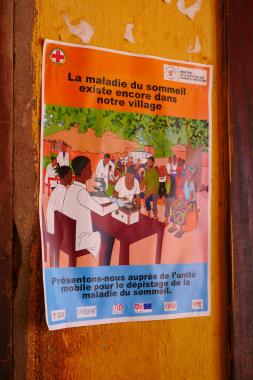
Moving from clinical success to real-world impact, the STROGHAT consortium, led by the Institute of Tropical medicine in Antwerp (ITM) and supported by Global Health EDCTP3, is currently evaluating a ‘screen-and-treat’ strategy. With a €4 million EU contribution, this project aims to demonstrate how this approach can increase treatment coverage with acoziborole, rapidly reduce sleeping sickness prevalence, and ultimately interrupt disease transmission.
‘The treatment has proven to be well accepted, well tolerated and effective. Three pills, and then you’re treated. Now, in order to reach patients in the most remote communities and eliminate this disease, the focus must remain on targeted interventions, continued screening, and sustained funding.’
Elena Nicco, infectious disease specialist and Principal Investigator of the StrogHAT project at ITM.
Over the first two years of implementation, the STROGHAT consortium performed an impressive 454,871 screening tests, reaching 95% of the at-risk population in the study area. Among those screened, 0.43% tested seropositive for trypanosome specific antibodies. By the end of 2025, a total of 803 individuals meeting the eligibility criteria had been enrolled in the clinical trial and treated with single-dose acoziborole. The clinical trial will continue for one additional year. In the fourth and final year, a large-scale prevalence survey will determine whether this innovative approach has effectively reduced sleeping sickness prevalence to zero in the targeted region.
Forging a path toward 2030
The approval of Acoziborole Winthrop marks a decisive victory for the Global Health EDCTP3 mission of fostering locally-led research that addresses global health inequities. It also represents the culmination of years of commitment by the many partners and donors who have contributed to sleeping sickness control and elimination efforts.
By streamlining the path from clinical trials to regulatory authorisation and, ultimately, to field implementation, Global Health EDCTP3 is empowering the global health community to reach the WHO goal of interruption of transmission of sleeping sickness by 2030.
This success reinforces the vital importance of sustained investment in international clinical partnerships to secure a healthier, more equitable future.
- Publication date
- 18 March 2026
- Author
- Global Health EDCTP3 Joint Undertaking