

When Ebola, mpox or another infectious disease emerges, the speed of the response can determine how many lives are saved. Yet in many parts of sub-Saharan Africa, researchers and health authorities still face barriers that slow the launch of clinical studies and the evaluation of new vaccines, treatments and diagnostics.
To help close this gap, Global Health EDCTP3 is investing more than €64 million in five research networks to strengthen epidemic preparedness and clinical research capacity across sub-Saharan Africa. The initiative is supported by the Coalition for Epidemic Preparedness Innovations (CEPI) and the UK Department of Health and Social Care (DHSC), through the National Institute for Health and Care Research (NIHR).
Building on more than 20 years of EDCTP investment in African clinical research, the networks will strengthen disease surveillance, laboratory infrastructure and clinical trial readiness, while training researchers and reinforcing collaboration between research institutions. These investments will help countries launch studies more quickly during outbreaks and generate the evidence needed to guide public health responses.
Regional and continental networks of excellence and preparedness
The initiative supports a total of five projects funded under the 2025 Global Health EDCTP3 call for strengthening the Regional Networks of Excellence and Epidemic Preparedness Consortia. Together, they bring researchers, public health institutes and clinical trial sites across Africa and Europe into long-term partnerships designed to generate evidence faster when health emergencies occur.
This comes at a time when outbreaks of Ebola virus disease, mpox and cholera continue to highlight the need for stronger research systems capable of rapidly evaluating interventions and informing public health decisions.
The networks are already being explored as a potential source of support for the response to the ongoing Bundibugyo Ebola virus outbreak in the Democratic Republic of the Congo (DRC). Following the launch of the Tumaini Phase 2/3 clinical trial, Global Health EDCTP3 is mapping the expertise, research sites and infrastructure available across the five networks to identify opportunities for in-kind support to the trial. Led and co-sponsored by the DRC’s National Institute of Biomedical Research (INRB) and the University of Antwerp in support of the Government-led outbreak response, the trial will evaluate the safety, immunogenicity and efficacy of vaccine candidates against Bundibugyo virus.
Advancing epidemic preparedness through strategic collaboration
The call for proposals was supported with co-funding from CEPI and DHSC, through the NIHR, whose contributions have specifically enabled the expansion of activities focused on strengthening epidemic preparedness and clinical research capacity.
As part of this collaboration, CEPI is contributing €6.83 million across four of the five funded networks (EACCR4, ACT-PREP, SINCEP-Africa and partially PRESERVE) to support efforts to enhance clinical research readiness, coordination between sites, and rapid-response capacity in the event of outbreaks. DHSC, through the NIHR, is supporting the fifth network, WANETAM-4.
‘Speed is critical in an outbreak, but it depends on having the right systems in place before a crisis begins. CEPI’s support for Global Health EDCTP3’s clinical research networks specifically aims to boost clinical trial readiness, coordination and rapid-response capacity across sub-Saharan Africa to strengthen epidemic and pandemic preparedness. This work complements CEPI’s Research Preparedness Program, which shares many of the same ambitions, and is central to the 100 Days Mission, which requires the ability to quickly generate clinical trial evidence in order to advance vaccines and other countermeasures when they are needed most.’
Dr Kent Kester, Executive Director of Research and Development, CEPI.
Building stronger systems before the next outbreak
Regional networks of excellence
PRESERVE: Advancing One Health preparedness in Central Africa
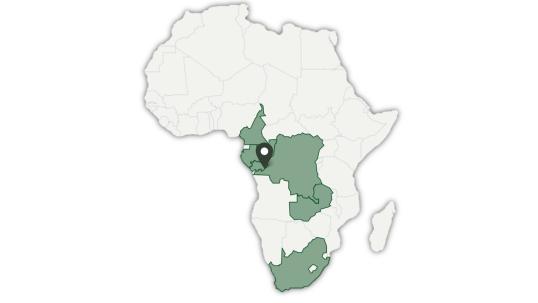
PRESERVE network places One Health at the centre of epidemic preparedness. Working across Central Africa, the network will strengthen laboratory systems, improve outbreak surveillance and establish adaptive clinical trial tools that can be activated rapidly during health emergencies. It will also support the development of a regional Institute of One Health and reinforce collaboration with public health agencies and international organisations.
‘Pandemic preparedness is dependent on effective collaboration and communication across countries. The PRESERVE project brings together partners in multiple sub-Saharan African countries and Europe as well as links with several other international networks active in developing capacity to identify and address emerging infectious disease threats. EDCTP Association is honoured to serve as coordinator of this project.’
Nuraan Fakier, Project Officer at EDCTP Association and PRESERVE spokesperson.
Global Health EDCTP3 funding, including CEPI’s contribution: €12.4 million, with an additional co-investment of over €1.6 million from contributing partners and partners assimilated to EDCTP Association members, including the Amsterdam University Medical Centre, Centre de Recherches Médicales de Lambaréné, HerpeZ, the Fondation Congolaise pour la Recherche Medicale, the One Health Institute for Africa, PANTHER, and the Societé Congolaise de Santé Mentale, among others.
EACCR4: Strengthening East Africa’s clinical research ecosystem
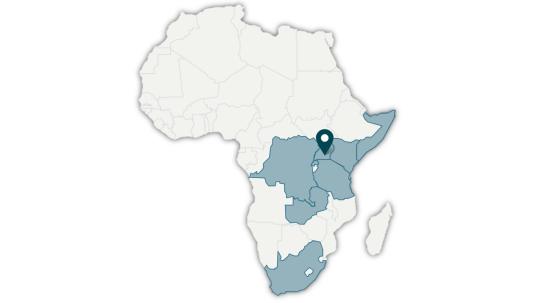
The EACCR4 network brings together 22 partners from 13 countries to strengthen the East African clinical research landscape. The project aims to create a more connected and resilient network capable of supporting both routine clinical research and emergency outbreak response.
Its work spans clinical trial systems, laboratory capacity, ethics and regulatory support, epidemiology and outbreak preparedness. Particular attention will be given to supporting institutions with fewer resources and expanding collaboration with national public health institutes.
‘A researcher working in isolation can only do so much. Without strong networks, early-career scientists miss out on the training, mentorship and collaborative opportunities that turn promising talent into lasting scientific leadership.’
Bernard Kikaire, Scientific Project Lead, UNHRO
The project will also establish surveillance systems for acute febrile illnesses, helping countries identify and investigate emerging threats more effectively.
Global Health EDCTP3 funding, including CEPI’s contribution: €12.7 million, with an additional co-investment of over €670,000 from contributing partners and partners assimilated to EDCTP Association members, such as the Good Samaritan Foundation, and the Amsterdam Institute for Global Health and Development, among others.
WANETAM-4: Capacity strengthening in West Africa
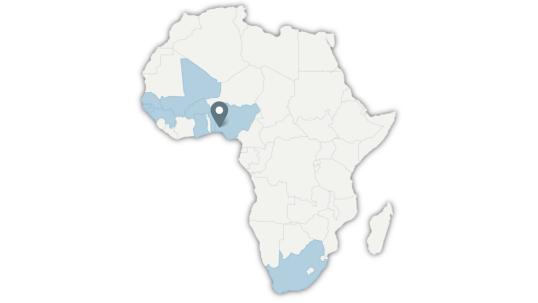
WANETAM-4 network represents the next phase of one of Africa’s longest-standing regional clinical research networks. The project builds on years of collaboration across West Africa and seeks to further strengthen the region’s ability to conduct high-quality clinical trials and respond to outbreaks.
The network will support research on diseases such as tuberculosis, malaria, and HIV while reinforcing epidemic preparedness activities, surveillance systems, and cross-border collaboration. It will also continue investing in training programmes and infrastructure improvements that will help ensure research expertise remains within the region.
‘Countries across West Africa share the same disease burdens but have historically struggled to coordinate their research efforts, partly because of linguistic and institutional barriers. WANETAM-4 brings together institutions from anglophone, francophone and lusophone countries to tackle that problem directly, making the whole considerably greater than the sum of its parts.’
Debora Bade, Project Officer at EDCTP Association and WANETAM-4 spokesperson.
By linking institutions across 12 countries, WANETAM-4 aims to create a stronger and more sustainable clinical research environment capable of responding to future health challenges.
Global Health EDCTP3 funding: €12.7 million, including DHSC’s contribution through the NIHR, with an additional co-investment of over €2,5 million from contributing partners and partners assimilated to EDCTP Association members such as the International Aids Vaccine Initiative (IAVI), Qure.ai, and the Malaria Consortium, among others.
Continental epidemic preparedness consortia
SINCEP-Africa: Turning surveillance sites into outbreak-ready research platforms
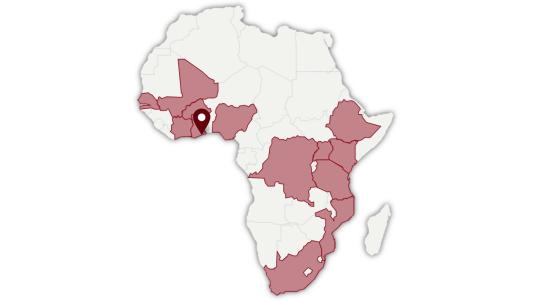
SINCEP-Africa network will transform existing health and demographic surveillance sites across sub-Saharan Africa into stronger platforms for epidemic preparedness and clinical research. Building on the INDEPTH Network, the project will strengthen 14 established surveillance sites and support the development of two new sites in Côte d’Ivoire and the Democratic Republic of the Congo.
‘The SINCEP-Africa project will build on a long-standing network of research sites carrying out health and demographic surveillance. By strengthening their clinical research capacity, they will be able to rapidly launch studies during outbreaks, generating evidence to inform disease control efforts and limit their impact.’
Bernard Oguto, Professor at Strathmore University and SINCEP-Africa spokesperson.
The project will focus on improving disease surveillance, upgrading laboratory infrastructure and ensuring that research sites can rapidly transition from routine monitoring to outbreak response. It will also train hundreds of researchers and clinical trial professionals while supporting postgraduate and postdoctoral scientists.
Global Health EDCTP3 funding, including CEPI’s contribution: €13.3 million, with an additional co-investment of over €12,2 million from contributing partners and partners assimilated to EDCTP Association members, such as CTI (Uganda), the Navrongo Health Research Centre (Ghana), the Ifakara Health Institute (Tanzania), and Fundaçao Manhiça (CISM), among others.
ACT-PREP: Creating a faster pathway from outbreak detection to clinical research
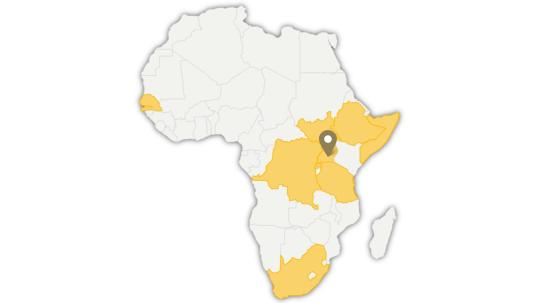
ACT-PREP network focuses on one of the biggest challenges during epidemics: launching research quickly enough to generate evidence when it is most needed.
The project will establish systems that enable clinical studies to begin rapidly during outbreaks. It will standardise research protocols, strengthen outbreak-ready clinical trial networks and improve coordination between researchers and public health authorities.
‘The ACT-PREP project brings together ten African and two European institutions, and is strengthening collaborations with key national and regional bodies, including national public health institutes and Africa CDC. This collaborative approach is essential to ensure the timely launch of studies during health emergencies.’
Rhoda K. Wanyenze, Scientific Project Lead at Makerere University School of Public Health and ACT-PREP spokesperson.
ACT-PREP will also invest heavily in people. More than 700 researchers are expected to receive advanced training. Additionally, new mentorship programmes, data science tools and artificial intelligence applications will help strengthen research capacity across participating institutions.
Global Health EDCTP3 funding, including CEPI’s contribution: €12.7 million, with an additional €6.6 million in co-investments from contributing partners and partners assimilated to EDCTP Association members, such as the Africa CDC, Infectious Disease Research Collaboration (Uganda), and the University of Global Health Equity (Rwanda), among others.
As a researcher or clinician in sub-Saharan Africa, you have access to registries, networks, training programmes, and knowledge platforms funded by EDCTP. These tools are open, active, and designed to support your work.
Tools and resources for researchers
About CEPI
CEPI was launched in 2017 as an innovative partnership between public, private, philanthropic and civil organisations. Its mission is to accelerate the development of vaccines and other biologic countermeasures against epidemic and pandemic threats so they can be accessible to all people in need. CEPI has supported the development of more than 50 vaccine candidates or platform technologies against multiple known high-risk pathogens or a future Disease X. Central to CEPI’s pandemic-beating five-year plan for 2022-2026 is the ‘100 Days Mission’ to compress the time taken to develop safe, effective, globally accessible vaccines against new threats to just 100 days.
About the Department of Health and Social Care of the United Kingdom (UK) and the National Institute for Health and Care Research
This research is funded by the UK Department of Health and Social Care (DHSC) through the National Institute for Health and Care Research (NIHR). The NIHR is a major funder of high-quality global health research that directly addresses the diverse health needs of people in low- and middle-income countries (LMICs). The NIHR Global Health Research Portfolio is primarily funded through UK Official Development Assistance (ODA) from the UK International Development budget.
Be the first to know about how we support epidemic preparedness.
Subscribe to our newsletter
- Publication date
- 29 October 2026
- Author
- Global Health EDCTP3 Joint Undertaking