
Over the past two decades, the European & Developing Countries Clinical Trials Partnership (EDCTP) programmes have facilitated thousands of scientists working to address infectious diseases that disproportionately affect sub-Saharan Africa. Many of these researchers have gone on to become global leaders in science, policy and public health.
Meet ten influential figures whose work has been facilitated through EDCTP fellowships, research projects or capacity-building initiatives. Their contributions span malaria genomics, HIV treatment, tuberculosis research, epidemic surveillance and medicines regulation. This is the first in a broader series spotlighting the many experts, backed by EDCTP, driving progress across global health.
Abdoulaye Djimdé

Professor Abdoulaye Djimdé is one of Africa’s leading experts on malaria genomics and antimalarial drug resistance. Early in his career he received an EDCTP1 Senior Fellowship, which enabled him to return to Mali, where he transformed a small team into a world-leading group of more than 30 scientists at the Malaria Research and Training Centre (MRTC) in the University of Sciences, Techniques and Technologies of Bamako, Mali.
Today, he leads the EDCTP-funded West African Network for Clinical Trials of Antimalarial Drugs (WANECAM), which has conducted major clinical trials evaluating new malaria treatments. WANECAM-1, funded under EDCTP1, generated evidence that supported the European Medicines Agency’s approval of a label extension for Pyramax®, a fixed-dose combination of artesunate and pyronaridine, for repeated treatment of uncomplicated malaria, as well as the approval of Pyramax® granules as a paediatric formulation.
Building on this work, WANECAM-2, funded under EDCTP2, conducted the KALUMA phase III trial, which demonstrated that GanLum is a safe and effective treatment for uncomplicated malaria, representing the first potential advance in malaria treatment in 25 years.
His long-standing commitment to science has led to his appointment to the UN Scientific Advisory Board in 2026.
Christian Happi

Dr Christian Happi is a molecular biologist and genomic scientist internationally recognised for his work on infectious disease surveillance. As an EDCTP1 Senior Fellow, he conducted research on biomarkers for monitoring malaria drug resistance while strengthening genomic research capacity in Nigeria.
He later founded the African Centre of Excellence for Genomics of Infectious Diseases at Redeemer’s University, Nigeria. During the 2014 Ebola outbreak, his laboratory confirmed Nigeria’s first case within hours, helping prevent a larger epidemic. His team also sequenced Africa’s first SARS-CoV-2 genome during the COVID-19 pandemic. In recognition of his global impact, he was named among the TIME100 list of the world’s most influential people in 2025 in the Innovators category
Cissy Kityo
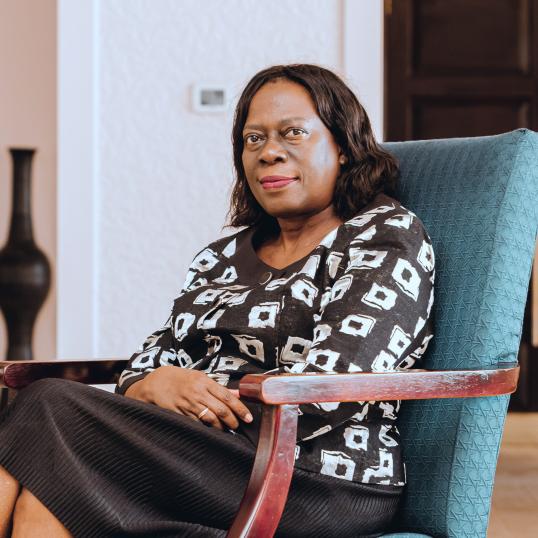
Dr Cissy Kityo is a physician and HIV researcher who played a pioneering role in introducing and scaling up antiretroviral therapy in Uganda. She has contributed to landmark HIV clinical trials supported by EDCTP, including the EARNEST and CHAPAS studies that helped shape international HIV treatment strategies. As part of the CHAPAS team, she received the EDCTP Outstanding Research Team Prize in 2018, recognising the team’s contribution to advancing HIV paediatric and adolescent treatment trials.
As Executive Director of Uganda’s Joint Clinical Research Centre (JCRC), she has led research on HIV treatment, drug resistance and care for people living with HIV for more than three decades. Her contributions to public health and clinical research were recognised with Uganda’s Golden Jubilee Medal for Outstanding Service and Loyalty in 2022.
Delese Mimi Darko

Dr Delese Mimi Darko is a leading figure in medicines regulation in Africa. She led the EDCTP2-funded BERC-Africa project, which strengthened regulatory capacity for clinical trials across multiple African countries by training staff from national regulatory authorities.
With over 30 years of experience, she rose through the ranks at the Food and Drugs Authority (FDA) Ghana to become its first female Chief Executive Officer in 2017. She was instrumental in achieving the designation of the FDA as a Regional Centre of Regulatory Excellence, and in developing and implementing Ghana’s Food Safety Policy and Food Emergency Response Plan.
In 2025, she was appointed the inaugural Director General of the African Medicines Agency (AMA). Her work has helped strengthen regulatory systems and ensure the safety and effectiveness of medicines across the continent. She was recognised on the TIME100 Health list in 2026 as key health leader.
Read the interview with Dr Darko for Women’s Day
Marieke van der Zalm
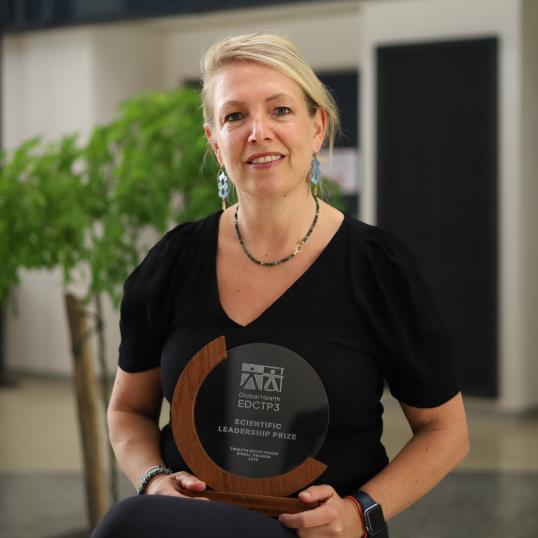
Professor Marieke van der Zalm is a paediatric clinical researcher and one of the world’s leading experts on the long-term impact of tuberculosis (TB) on children’s lung health. She received an EDCTP2 Career Development Fellowship in 2017, followed by an EDCTP2 Senior Research Fellowship Plus in 2020, which supported her research on paediatric TB and post-TB lung disease.
Her work has helped raise global awareness of the lasting effects of TB on children, while also exploring the interaction between TB and COVID-19. In addition to her research, she plays an active role in the global TB community as an expert contributor to WHO guideline development on TB-associated respiratory morbidity, working group co-chair for the International Union Against Tuberculosis and Lung Disease, and co-founder of an international symposium series on post-TB well-being.
Through her EDCTP fellowships, she has also mentored early-career scientists and supported the development of young researchers. In 2025, she received the EDCTP Scientific Leadership Prize for her pioneering contributions to paediatric TB and post-TB lung disease research.
Nicaise Ndembi
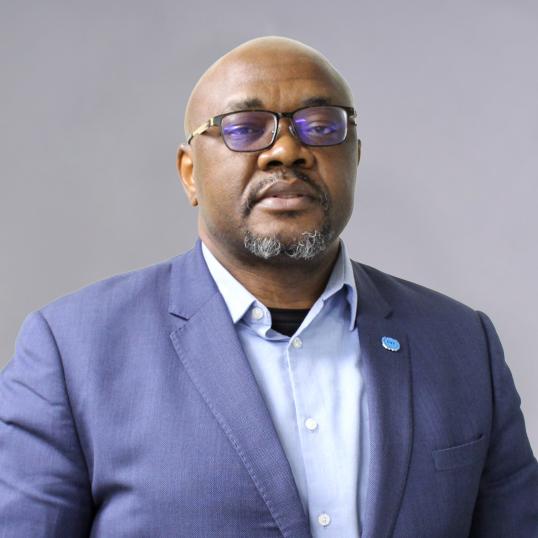
Dr Nicaise Ndembi is a renowned virologist and global health leader working at the intersection of science and policy. As an EDCTP1 Senior Fellow, he conducted research on dual infections with different strains of HIV-1 and their implications for disease progression and treatment in both low- and high-risk populations in Uganda.
He later served as Principal Advisor to the Director General of Africa CDC, where he helped establish the Partnerships for African Vaccine Manufacturing, a major initiative aimed at strengthening vaccine production on the continent. In 2024, he was appointed Deputy Director General of the Africa Regional Office of the International Vaccine Institute (IVI) in Rwanda. His leadership in epidemic preparedness earned him a place on the TIME100 Health list in 2025.
Pauline Byakika

Professor Pauline Byakika is a physician and infectious disease specialist whose research focuses on malaria treatment and the interactions between antimalarial and antiretroviral medicines. She was an EDCTP2 Senior Fellow from 2018 to 2023, leading research on how these drug interactions may affect malaria treatment outcomes in regions where HIV and malaria co-exist.
A long-standing academic at Makerere University College of Health Sciences in Uganda, she has published extensively on malaria, HIV co-infections and drug interactions. In 2024, she was appointed Vice-Chancellor of Mbarara University of Science and Technology, becoming one of Uganda’s academic leaders.
Salim Abdool Karim
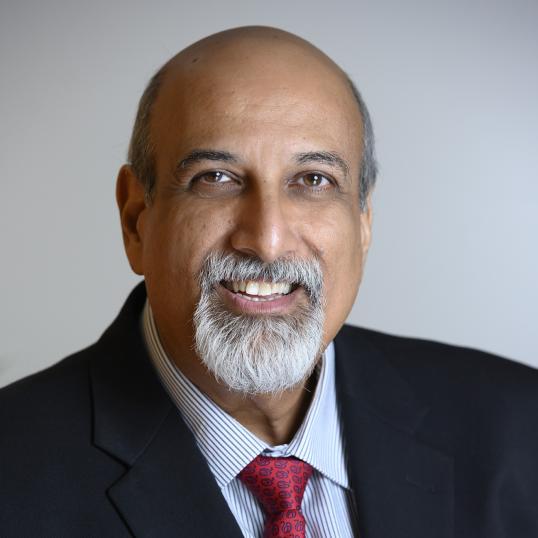
Professor Salim Abdool Karim is one of Africa’s most prominent infectious disease epidemiologists. As Director of the Centre for the AIDS Programme of Research in South Africa (CAPRISA), he has led influential research on HIV prevention and treatment.
He has also played a central role in responding to emerging epidemics, including serving as Chair of South Africa’s Ministerial Advisory Committee on COVID-19, guiding the national response to the pandemic. His long-standing collaboration with EDCTP includes leadership of the CAP012 SAMBA project, which evaluates broadly neutralising antibodies for HIV prevention. In 2011, he received the EDCTP Outstanding Senior African Scientist Prize.
Stellah Mpagama
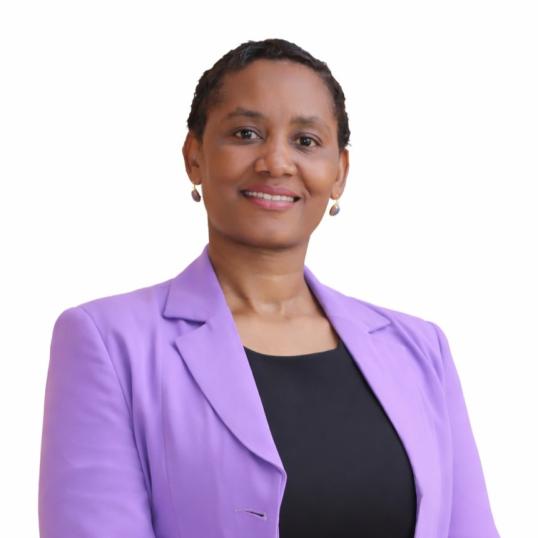
Dr Stellah Mpagama is a leading tuberculosis (TB) researcher whose work focuses on improving TB treatment and understanding how other conditions, such as diabetes, affect TB outcomes. Her early research career was supported through the EDCTP1- and EDCTP2-funded PanACEA consortium, aimed at accelerating the development of shorter TB treatment regimens and developing a sustainable TB clinical trials network in Africa.
She later received an EDCTP2 Senior Fellowship to investigate ways to reduce the side effects of TB medicines while training doctoral and master’s students in Tanzania. She is now the principal investigator of the OptiRiMoxTB trial, part of the EDCTP2-funded SimpliciTB project, which is evaluating a shortened TB treatment regimen.
Dr Mpagama also co-leads the Global Infectious Diseases Research Programme, a joint initiative between the Kilimanjaro Clinical Research Institute (KCRI), Tanzania, and the University of Virginia, USA, which is providing tailored training to six postdoctoral researchers from Tanzania, supporting their development as future research leaders.
Tulio de Oliveira

Professor Tulio de Oliveira is a bioinformatician and global leader in genomic surveillance of infectious diseases. He founded the KwaZulu-Natal Research Innovation and Sequencing Platform (KRISP) and the Centre for Epidemic Response and Innovation (CERI) in South Africa, both of which play a key role in monitoring emerging pathogens in Africa.
During the COVID-19 pandemic, his team identified and reported the Beta and Omicron variants of SARS-CoV-2, discoveries that helped inform the global response to the pandemic. His work led him to be named in the TIME 100 Health list as one of the world’s most influential people in 2024.
In 2025, he received the EDCTP Scientific Leadership Prize and currently leads the Global Health EDCTP3-funded GenPath Africa project, which is strengthening genomic surveillance capacity across several African countries.
- Publication date
- 7 April 2026
- Author
- Global Health EDCTP3 Joint Undertaking